

Ron Holmes – Gemini (Nov 2nd, 2026)
https://smoothjazzdaily.wordpress.com/2026/10/08/ron-holmes-gemini/#more-31766
Ron Holmes - Eclecticism / Gemini
How does one approach an album that is conceptually well-thought-out and, with its 19 tracks, stands as a stunning example of creative outburst? The concept behind Gemini is based on the idea of musical duality, inspired by the eponymous zodiac sign and Ron Holmes’ philosophy of eclecticism. Holmes describes the album as a two-sided acoustic canvas that connects contrasting yet complementary musical worlds: One side of the concept represents mathematical precision, well-thought-out arrangements, and controlled tech-fusion. The other side breaks down these structures and is dedicated to free, cosmic improvisation and spiritual jazz. The album serves as a melting pot. Holmes blends traditional African American musical forms such as jazz, funk, and soul with the complex polyrhythms of Afrobeat and progressive avant-garde elements. The goal of the concept is to show that apparent opposites, such as intellect and emotion or tradition and modernity, can coexist harmoniously in music.
The term “fusion jazz” is so broad that it can be defined more as a general suggestion than as something specific. Ron doesn’t get carried away with intellectual virtuosity that appeals only to a pseudo-elitist circle; instead, he celebrates his music in a way that is understandable and accessible. While his concept permeates his entire body of work, it does not isolate it from his audience. Ron acts as the visionary bandleader, composer, and driving force behind the live group. He is widely recognized for his long-standing jazz-funk/fusion collective fo/mo/deep. For the Eclecticism Project and the upcoming Gemini album, Ron Holmes has created, performed and programmed everything himself, from the heavy horn section, rich African/Afro-Latin percussion, and a soul-infused rhythm section to keyboards with atmospheric layers, chordal textures, and fusion synth work essential to the album’s “cosmic” feel. He also provides a soulful, blues- and funk-driven guitar style that cuts through the groove and infuses the music with deep Afro-Latin and African-influenced polyrhythms.
The record’s brilliant narrative arc is perfectly crystallized on Queens’ Strut, the heavy horn section locks into an tight, infectious pocket with drums and percussion. Here, the polyrhythmic African and Afro-Latin undercurrents provide a dense canvas for the soulful, funk-edged guitar lines to slice through. Papa Got New Threads draws its energy from speed, virtuosity, and explosive horn power. The baseline serves as the true anchor here; executed with fluent precision, it carves out a deep, foundational architecture that allows the remaining instrumentation to intervene precisely within the intervals. Ron contemplates: “I wrote Papa Got New Threads as a tribute to my dad cuz he was a cool dresser!”
The vocals in the fascinating interlude Peaceful Until are created using plugins in combination with Cubase for his digital work station. After The Pause anew presents a generated vocalist with a slightly husky voice. Ron comments: “If you listen closely you hear her describe a crime scene. Creepy…..” Holmes uses special plugins such as the Dubler 2 voice-to-MIDI system. This allowes him to use his own voice to control MIDI signals in order to “sing” complex instruments such as keyboards or brass sections. To replicate the rich, polyrhythmic sound he’s known for with his usual eight-piece live band, he relies on samples, MIDI voice controllers, drum machines, and digital drum pads. He combines his virtuosity on the acoustic bass with AI-powered production plugins to create an avant-garde jazz-fusion masterpiece.
Even against this backdrop, his compositions, such as She, featuring saxophone, piano, and drums, are flawless and perfect in their instrumentation, intonation, and melodic lines. For me, a personal highlight of his creativity culminates in Máa Gbéra. The title, which, in the Yoruba cultural context, means something like “Keep going” or “Keep moving”, perfectly captures the boundless energy of this entire one-man project. Holmes manages to build a driving, almost hypnotic Afrobeat foundation. Without a live drummer or percussionist in the room, he uses his studio plugins and MIDI controllers so masterfully that the polyrhythms feel alive and come across as extremely organic. Layered over this dense rhythmic tapestry is his deep-rooted, handcrafted bass. It forms the emotional and rhythmic backbone of the song, which inevitably sweeps the listener along. The blend of precise programming of the horn and keyboard elements (via his voice-to-MIDI system) and raw, unbridled improvisation perfectly captures the duality that defines the entire Gemini concept.
Ron takes a completely different approach on Dear Nana, which stands out with its soulful piano playing and a touch of swing. The fact that a trained bassist can record such a nuanced, soul-infused piano track in the studio once again underscores his immense talent as a multi-instrumentalist. His touch and harmonies convey a deep, almost nostalgic warmth. The subtle swing rhythm lends the song a timeless elegance. It sounds like a tribute to the great jazz classics, reimagined in the modern, DIY style of a home studio. Instead of overloading the mix with layers of plugins, Holmes gives the instruments noticeable “breathing room” here. Each note stands on its own and creates a tangible, personal atmosphere. Ron comments: “I wrote dear Nana as a tribute to my grandmother. I wanted the piano to sound like that piano she used to have in her dining room those upright pianos with the coursey sound.”
Through this biographical lens, Bloom becomes a profound conversation between Ron Holmes and his elders. By setting their spoken wisdom to music, Ron isn’t just singing a song; he is honoring the survival tools his dad and grandma gave him. In the quiet of his studio, surrounded by modern AI technology and instruments, he uses the ancient, steady engine of family love to drive his art forward. Behind this lies the same philosophy as in Máa Gbéra: don’t complain; instead, strive to move onwards. If Bloom is about digging into the rough ground to grow, Cherish is about “holding onto what you have grown.” It is a soulful, grounded, and emotionally heavy track that balances the frailty of human life (“every breath is borrowed gold”) with the enduring strength of shared love. Ron explains: “Yes sometimes people don’t always feel cherished and sometimes you have to remind yourself to be cherished.”
The title song acts as a stylistic anchor of the album. Placing a clear, piercing trumpet sound at the very center of the piece followed by an elaborated keyboard solo elevates its jazz-fusion identity to a completely new level.
The core of the song revolves around the Yoruba word Òmìnira, which translates directly to freedom, independence, and liberty. Because the song embraces every aspect of this concept, its lyrical content flows through three distinct dimensions. In a broader cultural sense, the Yoruba lyrics pay homage to the ancestral struggle for independence and breaking chains. It serves as a reminder of the collective price paid for liberty, honoring historical endurance and the resilience of a people reclaiming their sovereignty. It speaks directly to modern society, addressing the ongoing socio-political desire for true emancipation and the right to live without oppression in today’s world. Most importantly, the lyrics serve as an intimate call to action for the individual. It addresses the internal cages we often build or allow others to place us in. The text passionately urges you to grant yourself the ultimate freedom—the liberty to choose your own path, block out external noise, and take decisive action to grow, evolve, and prosper on your own terms.
Not Digging It is an introspective anthem about emotional exhaustion, creative blocks, and the feeling of losing control. The song describes the honest acceptance that comes when motivation wanes and you have to admit to yourself that a situation is untenable. Despite the frustration and fatigue, the exhaustion ultimately transforms into a defiant determination to make tomorrow a better day. Muoyan Omu Mu is a song in Yoruba about a woman in need of love who tries in vain to win her boyfriend’s affection. Ron loves this Nigerian language and the possibilities this fluid language offers for musical experimentation.
Come Back Home, describes the loneliness of a person who is grieving the loss of a loved one. The opening lines are stunning in their imagery. Ron perfectly captures the immediate aftermath of a departure through everyday objects left behind. The emotional core of the track hinges on the brilliant hook: “I can’t keep loving the outline.” It perfectly summarizes the purgatory of being left behind. The narrator is surrounded by the shape of the person—their skipped record playing all night, their space on the corner—but the actual human is gone. The line “I wore your silence like a borrowed coat / Too tight in the chest, too wet at the throat” is an incredibly visceral way to describe the physical anxiety and choked-back tears of grief.
Oh You is a sultry, infectious celebration of late-night chemistry, physical connection, and the hypnotic power of a shared groove. Following the emotional devastation of Come Back Home and the raw exhaustion of Not Digging It, this track serves as a passionate, high-energy peak of mutual attraction where everything clicks perfectly into place.
Orita (The Crossroads) is based on a poem called, “The Mesh” by the Ghanaian poet Kwesi Brew (1928–2007), published in his 1968 collection The Shadows of Laughter. The word “Orita” (which means “crossroads” or “junction” in Yoruba) serves as a metaphor for a major turning point in life. The song captures that exact, universal human moment where one feels stuck, plagued by doubt, and paralyzed by the choice of which path to take. It represents a crisis of direction that everyone eventually faces. However, the moment clarity is achieved, the confusion instantly vanishes into the past. Beyond a simple love story, the song mirrors the broader political journeys of nations and leaders. It represents the historical and ideological crossroads that societies face (especially in post-colonial contexts), where they must find a moral compass—a guiding light—to escape political paralysis and move forward.
Cold, Blind, and Beautiful presents the sax as lead instrument. Instead of fading into the background as a mere supporting instrument, the saxophone acts as the fierce, beating heart of the track. It is aggressive, sharp, and deeply expressive.
The final Wayment (More To Say) is fusing a hard-hitting, infectious funk groove with the adventurous, virtuosic spirit of classic fusion. This track is a showcase for a fiery, tight-knit ensemble. The rhythm section lays down an unshakable foundation, creating a perfect playground for the electric piano’s nimble melodic lines and explosive soloing. The arrangement is a dynamic journey, shifting from catchy, syncopated themes to moments of wild, free-form abandon and back again without losing its core energy. Ron delivers everything from the lock-step unison hits, the call-and-response phrases, and the intuitive support during solos—that truly defines the performance. It’s a powerful statement that honors the legacy of bands like The Headhunters while forging its own exciting path.
With Gemini, Ron Holmes fuses rigorous compositional architecture and cosmic improvisation into a polyrhythmic Gesamtkunstwerk that dissolves the boundaries between contemporary avant-garde and African musical traditions. Functioning as the sole mind behind a seemingly expansive ensemble, he transforms modern studio technology into a deeply organic medium, seamlessly blending complex intellectual constructs with raw emotional immediacy. Ultimately, the album serves not only as a manifesto of artistic autonomy, but as a compelling proof that intellectual rigor and accessible spirituality can resonate within the exact same space.

Tuesday, February 24, 2026
Jazz chill music
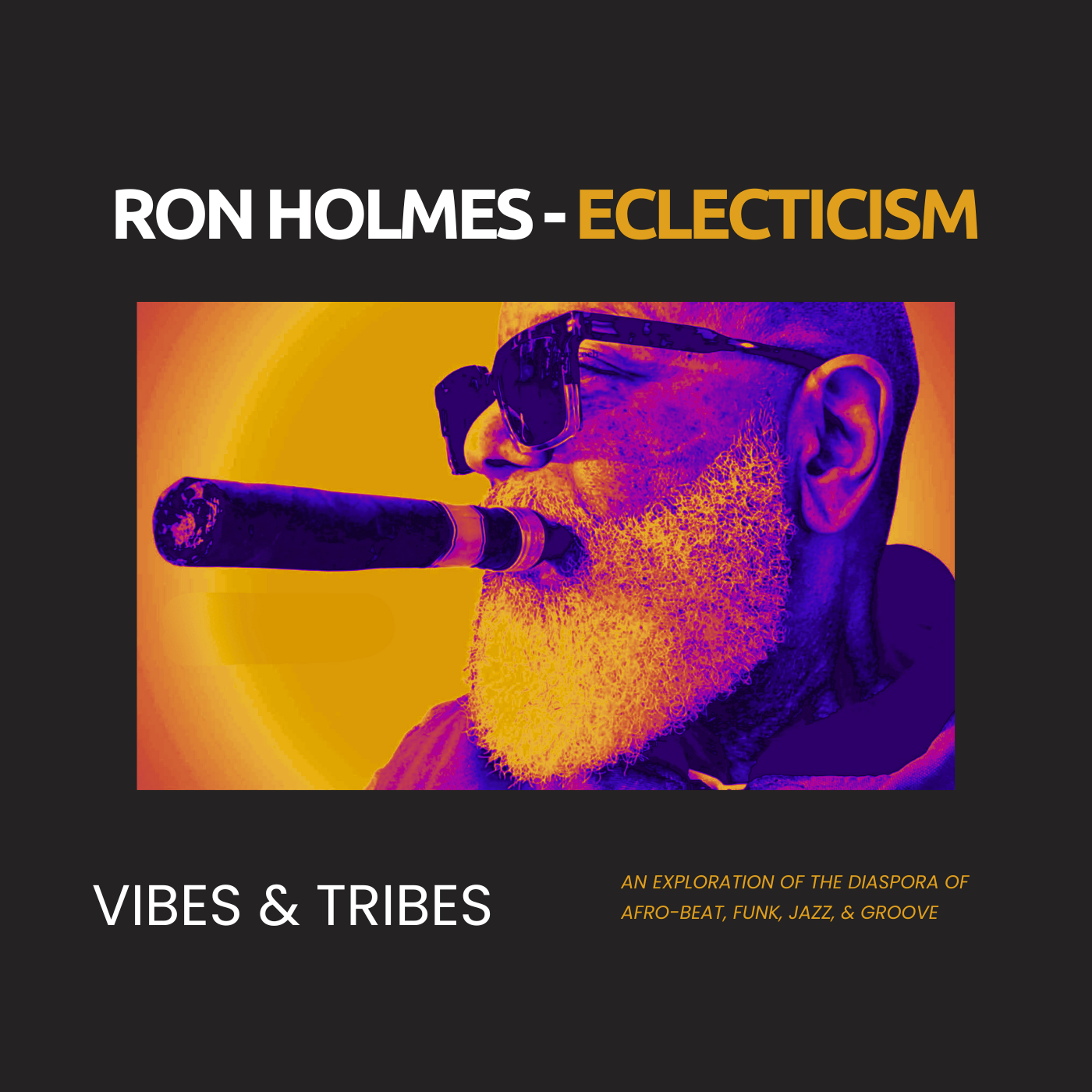
Vibes & Tribes: Ron Holmes Launches the Eclecticism Project with Genre-Bending 8-Piece Statement
Bassist and bandleader Ron Holmes unveils a bold new chapter with the Eclecticism Project, culminating in the release of Vibes & Tribes on February 6, 2026 via RHMedia, LLC. Known as the visionary force behind the acclaimed jazz fusion collective fo/mo/deep, Holmes now expands his sonic palette even further, assembling a dynamic 8-piece ensemble that fuses Afro-Beat, Jazz, Funk, Soul, and Groove into a high-energy, full-bodied statement of purpose.
At its core, Ron Holmes – Eclecticism is rooted in collaboration and curiosity. The music moves fluidly across stylistic boundaries, shaped by the musicians in the room and the lived experiences they bring to the stage. Holmes describes the project in simple, grounded terms: it’s about connection—making music with people and for people. Just a cat following the groove wherever it leads. That ethos animates Vibes & Tribes, a record that celebrates both individuality and collective spirit.
Holmes’ reputation for forward-thinking fusion dates back to fo/mo/deep’s formation in 2007. Over the years, the group has consistently pushed contemporary jazz and funk into new territory, earning critical praise for albums such as Syzygy (2019), The Groovy Goodness (2014), A Beautiful Bang (2012), and Eclecticism (2010). With the Eclecticism Project, Holmes builds on that legacy while embracing an even broader musical vocabulary, drawing inspiration from Afro-Beat rhythms, jazz improvisation, funk drive, and groove-centric soul textures.
Vibes & Tribes is performed by a powerful 8-piece configuration featuring a commanding horn section and Afro-Latin percussion, evoking the spirit of the great supergroups while remaining firmly rooted in the present. The sound is expansive and celebratory—music designed to move bodies as much as minds. Holmes’ bass anchors the ensemble with authority and warmth, providing both rhythmic propulsion and melodic counterpoint as the arrangements unfold.
The album’s twelve original tracks offer a wide-ranging yet cohesive journey. From the sly swagger of “Isn’t it Time (For That Cigar)” to the punchy urgency of “On My Way (With a Quickness)” and the infectious drive of “The Yaya Club (Red Sea),” the record pulses with vitality. Pieces such as “Yet, Still (Wanting You)” and “Such a Beautiful Soul” reveal a lyrical sensibility beneath the groove, while “Groove in the Air” and “What a Groovy Time” lean fully into the celebratory ethos that defines the project. Select tracks, including “Stir It Apart,” “On My Way (With a Quickness),” “The Yaya Club (Red Sea),” and “Such a Beautiful Soul,” are poised as potential singles.
Holmes’ Eclecticism Project is marked by its refusal to be boxed in. Instead, it embraces multiplicity—honoring the diasporic threads that connect Afro-Beat to funk, jazz to soul, and groove to communal ritual. The result is music that feels both deeply rooted and forward-looking, equally at home on festival stages, in jazz clubs, or blasting through summer speakers.
Based in Ohio, Holmes continues to evolve as both composer and bandleader, carrying forward the mission that has defined his career: to create music that celebrates the human spirit. Vibes & Tribes stands as the latest testament to that vision—an exhilarating sonic tapestry that invites listeners into a shared rhythmic experience.
https://jazzchill.blogspot.com/2026/02/vibes-tribes-ron-holmes-launches.html
https://www.distritojazz.com/discos-jazz/ron-holmes-eclecticism-vibes-tribes
Ron Holmes – Eclecticism: Vibes & Tribes
"Vibes & Tribes", released by Ron Holmes under the Eclecticism project, is the latest chapter in the career of American bassist and front man Ron Holmes.
After years leading the jazz-funk collective fo/mo/deep—with albums like "Eclecticism" (2010), "A Beautiful Bang" (2012), "The Groovy Goodness" (2014), and "Syzygy" (2019)—Holmes presents his most ambitious vision yet: an octet exploring the diaspora of Afrobeat, funk, jazz, soul, and groove across twelve original tracks. The album's brief forty-minute runtime feels far too short.
The ensemble is the main protagonist; a powerful horn section (trumpet, saxophone, trombone), African and Afro-Latin percussion (congas, bongos, shekere), blues/funk guitar and Holmes' solid bass as the anchor.
One of the album's greatest strengths is its rhythmic richness. The percussion and bass lines build a solid and dynamic foundation, upon which nuanced melodic layers unfold.
The album lives up to its title; from the first bars, Holmes makes it clear that his intention is not to be pigeonholed, but to engage in dialogue with multiple musical traditions, especially those linked to contemporary jazz, funk and nuances of world music.
Everything is original, highlighting Holmes' compositional maturity: catchy melodies, fluid rhythmic changes, and space for collective improvisations without falling into gratuitous virtuosity.
"Vibes & Tribes" is an ambitious, solid, and unpretentious work that delivers exactly what it promises: a multicultural groove feast. Ron Holmes solidifies Eclecticism as a vibrant and relevant project in contemporary jazz-funk.
Ron Holmes manages to build a sound universe where different musical "tribes" coexist without losing their identity.
If you're looking for uplifting music without complications, this is a definite winner.
(The only drawback to the album is that, being a self-produced album, there is no information available about the participating musicians).
Delein.
Musicians: Ron Holmes (bass)
Year: 2026
Style: Jazz funk